|
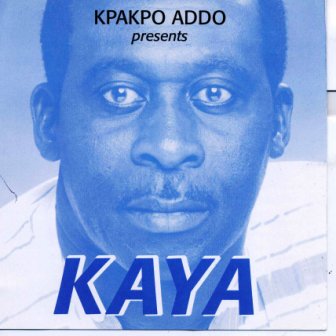
With the release of “Kaya”,
Teddy Kpakpo Addo
has done that. He has given a much
needed fresh breath to the highlife music
as well as returned to the form its basic foot
print..
On this
"Kaya" disc, he is
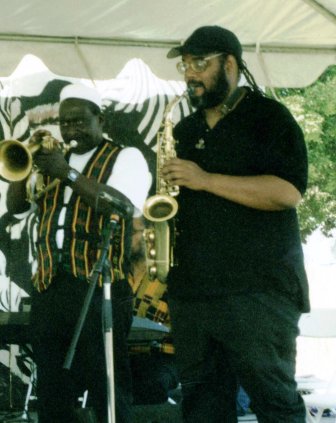
ably aided by Ray Allen; on alto saxophone, and
Stan Plange, the producer and arranger of the
pieces.
Kpakpo
preferred instruments are the
trumpet, and
flugelhorn. He is also
the voice on all the songs.
The resulting
effort
from the above artists
is on the Kaya disc; an
outstanding collection of music
of the highlife
lore that is going to be a favorite
for music lovers for a
long time to come.
Kpakpo for the
past decade and half is based in Los Angeles,
California. The recording of
Kaya was, however, done in
Ghana.
That the "Kaya" album
is an authentic sound
of the highlife music of the 60's
in Ghana and the West African coast should come as no surprise.
Kpakpo, Ray and Stan were all former members of
the famous Uhuru Dance Band, the dance band
of choice of that era in
Africa that helped to
put the highlife genre
on the map for the
musical world.
But, sadly, in Ghana today, the home of the original
highlife music, this genre
is gone or has
morphed into something
else.
From what was a clear musical
print of a West African origin, we now have a
conglomeration of rhythm
from all origins - a musical form that is a medley of many cultures
and no character.
Yet,
in the
memory of veteran performers
like Kpakpo, the highlife still lingers
on, buoyed by the support of fans
who had the good fortune of growing
up in the 60s and those of
today's youth who do
appreciate the richness of
the musical form.
Surprisingly,
it is more the youth who sometimes come to the
quick conclusion that there
is something missing in the musical
form they call the "highlife" today. These
with time have come to appreciate
tunes like the ones printed
on Kaya all the
more
For the initiated, the original highlife sound
comes in a recognizable type
– the sweet,
bluesy, usually bouncy tempo
( but not hard swinging).
Just rhythmic enough to turn lovers into
dancers or urge them on to
the dance floor in pairs..
Though often disguised as
“World Music”
these days, the
highlife sound has become
one of Africa’s greatest contributions
to the world of culture and music. You
know it when you hear Paul
Simon on “Spirit
Voices,” from his album “Rhythm of the Saints.”
What you hear is
the authentic, unadulterated Ghanaian highlife music
as perfected in the 60s.
The song itself is the same catchy old Ghanaian song called "Yaa
Amponsah."
In its basic aesthetic form, the highlife is
both danceable and contemplative. Kpakpo’s
selections, his simple raw vocal style, and his
dexterous interpretation of the songs on his
horn explain why the highlife is a great musical
form.
The song “Odo Bra” on the album “Kaya,” caresses
like a lullaby while encouraging estranged
lovers to reminisce about the past, when
thoughts were more pleasant, and
asks to allow those
thoughts to bring about a reunion.
Hear “Kaya,” the title song and you would be
listening to the taunting voice of a jilted
lover, who in his mind, has lost the love of his
life to an "inferior".
In another song, “Awusa Dzimi,” you hear the
universal lament of the orphans of the world.
The composition is much much older than Bob
Marley’s “Redemption Song.” But the pathos is
the same.
Regardless of the
title of the song, you will still be within the
sensuous world of highlife music. The pity is
there is a lot of this stuff out there that has been ignored, and would have been
shoved into oblivion but for the efforts of few
enterprising musicians like Kpakpo.
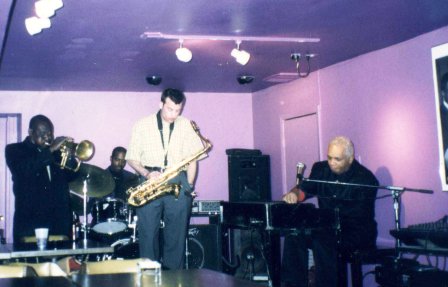
Listen to Kpakpo
play alongside Ray, or any of the musicians on
some of the songs, and you hear fellow travelers
heading in the same direction, each providing
out of his head a tonal edge to the other’s
effort while still delivering the musical
attitude that is highlife.
Kpakpo’s interpretation of these highlife
standards brings memories to the initiated. Faces of
forgotten lovers will, perhaps, pop up as
particular songs work their magic on the mind.
Simply stated, it is
what the highlife
music does best - the hallucinegic effect on
your heart and an imposition of a bit of
forgotten realism on your mind. In all,
high-life is the realism of being, at least,
West African.
But as you listen, under it all, you may notice
some other influences this time; mostly in the
style of the horn player Kpakpo. As an avid
student of jazz, he shows tinges of Hubbard,
Farmer and sometimes Masekela.
In a sense, “Kaya” can serve as a primer for the
highlife novice. The initiated will still be at
home, while “Kaya” provides the tie that pulls a
precious cultural heritage into the 21st century
and beyond – bringing along a heavy load of
nostalgia.
And along the way, the album “Kaya” will tell
you what to do – Dance!
E. Ablorh-Odjidja, Washington, DC May 21,
2004: |